Fondue with Gruyere and Mushrooms
Highlighted under: Basic Quick Meals Ideas
Fondue with Gruyere and Mushrooms
Fondue with Gruyere and Mushrooms
Fondue with Gruyere and Mushrooms
Building Deep, Savory Flavor
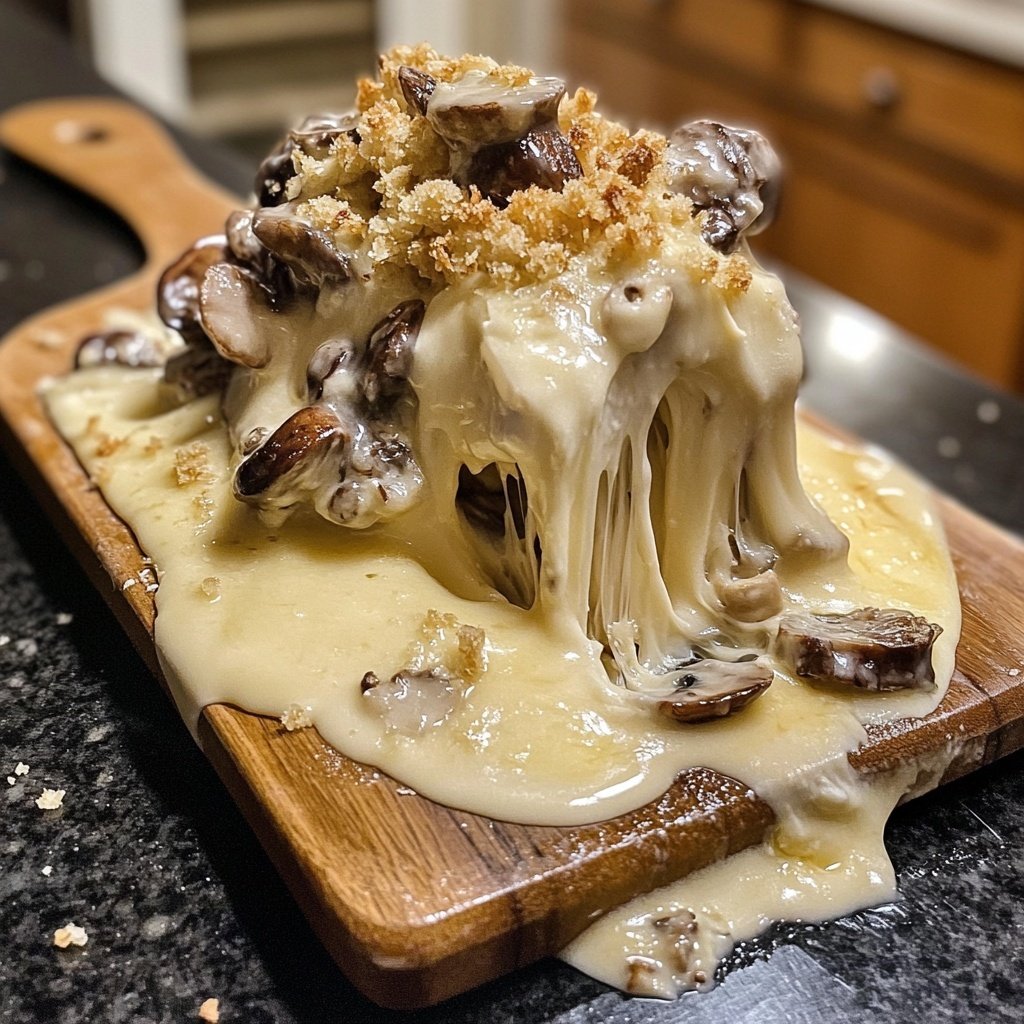
Gruyere is the backbone of this fondue, so use a well-aged wedge with a nutty aroma and firm texture. Its higher fat content helps the mixture melt smoothly while delivering that classic, slightly sweet tang. Combining it with sautéed mushrooms deepens the umami, so don’t rush that step. Let the mushrooms cook over medium heat until their juices evaporate and the edges turn golden; this concentrates flavor and prevents watery, thin fondue later.
The mushrooms do more than add flavor; they also influence the fondue’s texture. Thinly sliced or finely chopped mushrooms integrate better into the cheese, giving you a velvety base dotted with tender bites rather than slippery chunks. If you prefer a subtler mushroom presence, reserve some to stir in at the end, just off the heat, so their flavor stays bright and their texture slightly firm for contrast against the creamy Gruyere.
A dry white wine (or a splash of dry vermouth) is usually used to start the fondue base, and the acidity is crucial for keeping the Gruyere from turning stringy. Simmer the wine gently for a minute or two before adding cheese so some alcohol cooks off, but keep it below a boil once the cheese goes in. Vigorous boiling can cause separation; a gentle bubble or even just steam is the ideal cue for a glossy, cohesive sauce.
Technique for a Smooth, Silky Fondue
Grating the Gruyere finely and tossing it with a spoonful of flour or cornstarch before it meets the pot is key to preventing clumps. The starch coats each shred so it melts gradually and helps thicken the mixture. Add the cheese in small handfuls over low to medium-low heat, stirring constantly in a zigzag or figure-eight motion. Circular stirring can just spin unmelted cheese around; you want to pull it through the hot liquid so it dissolves evenly.
Temperature control makes or breaks this recipe. Start your pot over medium heat to bring the wine and aromatics to a gentle simmer, then immediately lower to medium-low once you begin adding Gruyere. If you notice the surface looking oily or the cheese forming long, rubbery strands, the fondue is too hot. Move the pot off the burner for a minute and whisk in a teaspoon of wine or water to re-emulsify before returning it to gentle heat.
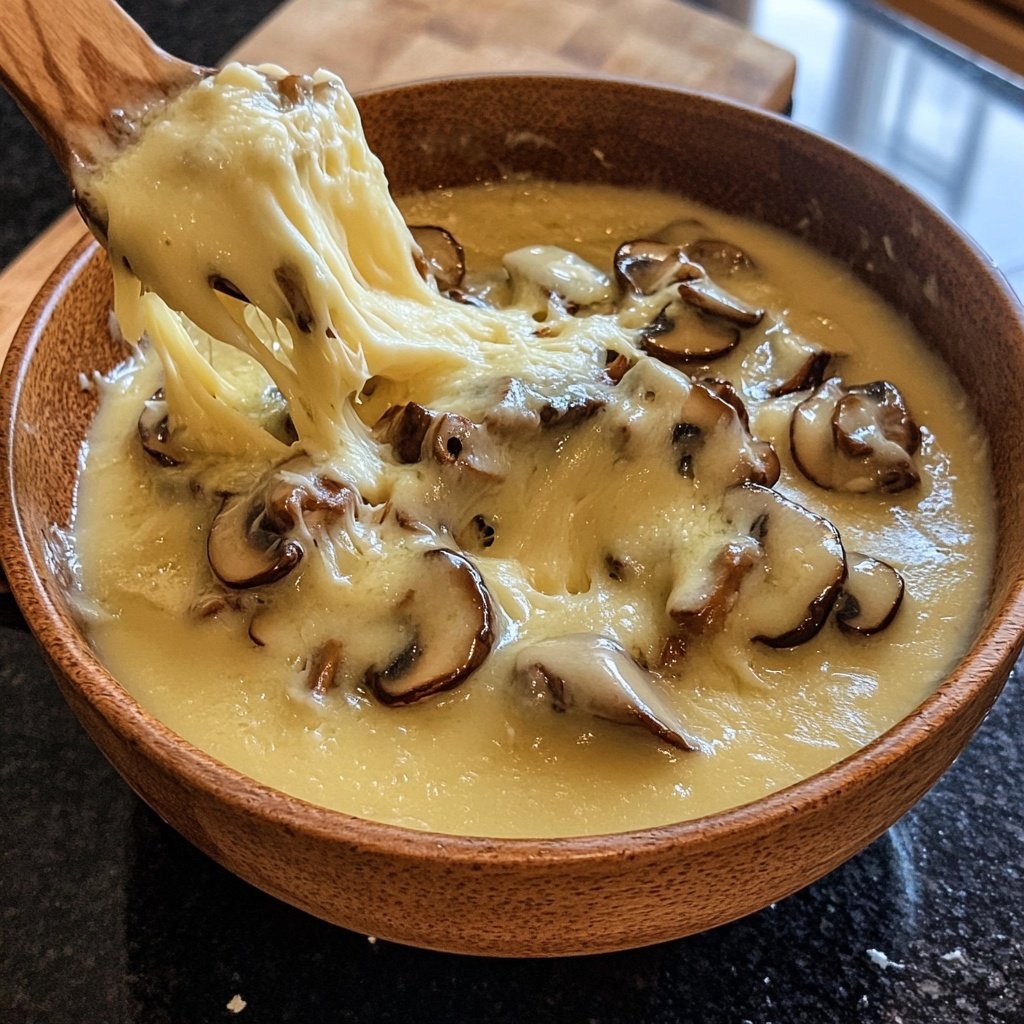
Incorporating the mushrooms at the right moment helps preserve both flavor and texture. Sauté them separately until browned, then fold them in once the cheese is fully melted and smooth. If you add them too early, their released moisture can keep the cheese from thickening properly. If the mixture seems thicker than you like after adding mushrooms, whisk in an extra splash of warm wine or stock, a teaspoon at a time, until it relaxes into a slow, ribbon-like pour.
Ingredient Swaps, Pairings, and Variations
If Gruyere is hard to find or you want a milder flavor, you can replace up to half with Emmental or a good-quality Swiss cheese while keeping the same total weight. Avoid pre-shredded bags; anti-caking agents make the fondue grainy. For the mushrooms, cremini or baby bella add a deeper, almost meaty note, while button mushrooms keep things lighter. Slice them uniformly so they cook at the same rate, preventing some pieces from going limp while others stay firm.
To adjust the richness without losing the character of the dish, play with the ratio of wine to cheese. A slightly higher wine proportion creates a looser, more pourable fondue that clings delicately to bread and vegetables; this works well if you’re serving many dippers. For a thicker, more decadent texture, decrease the wine slightly and cook over a few extra minutes of gentle heat. Just keep some extra warm liquid nearby to thin if it tightens too much on the table.
You can change the entire mood of this fondue by switching the mushroom variety and garnish. Shiitake or oyster mushrooms give an earthier, more pronounced aroma; I like to finish those versions with a sprinkle of fresh thyme or chives. For a slightly smoky twist, sauté a few chopped mushrooms in butter with a pinch of smoked paprika and stir them in at the end. Serve alongside crusty bread, blanched broccoli, steamed baby potatoes, or roasted Brussels sprouts to echo the mushroom’s savoriness.
Make-Ahead, Reheating, and Storage
Fondue is at its best freshly made, but this Gruyere and mushroom version can be prepped in stages. You can grate the cheese and toss it with starch up to a day ahead, storing it airtight in the fridge. The mushrooms can also be fully sautéed in advance; cool and refrigerate them separately so their moisture doesn’t soften the cheese. When you’re ready to serve, bring both to room temperature before you start cooking so they melt and blend more evenly.
Leftover fondue thickens considerably as it cools, but it’s still usable. Transfer it to a shallow, airtight container and refrigerate for up to two days. For reheating, scrape the set fondue into a small saucepan with a few tablespoons of wine, milk, or water. Warm it over low heat, stirring constantly and pressing out any lumps with a spatula or whisk. Add more liquid a teaspoon at a time until it returns to a smooth, gently flowing consistency.
If the reheated fondue looks slightly grainy, a quick emulsion fix helps. Keep the pan over very low heat and whisk in a small knob of butter or a teaspoon of cream; the extra fat can help smooth the sauce. Avoid the microwave for large amounts because hot spots cause the cheese to separate; if you must, use short, low-power bursts and stir thoroughly between each. Once revived, use it promptly, as repeated reheating will dull the Gruyere’s flavor and silkiness.
Serving, Dippers, and Presentation
How you serve this Gruyere and mushroom fondue affects the eating experience almost as much as the recipe itself. A classic fondue pot with a small flame keeps the cheese warm and fluid, but keep the flame modest—just enough to maintain a soft bubble at the edges. Without a special pot, a heavy enameled saucepan set on a trivet retains heat well for 20–30 minutes; give it a stir every few minutes to keep the mushrooms evenly distributed.
Choose dippers that can stand up to the fondue’s rich, earthy flavor. Slightly stale or oven-dried baguette cubes hold their shape better than soft bread and soak up just enough cheese without falling apart. Lightly blanched vegetables—such as broccoli florets, cauliflower, or green beans—add freshness that balances the nutty Gruyere and savory mushrooms. Steamed or roasted baby potatoes work especially well; their creamy interiors pick up the fondue and echo its buttery texture.
For a more composed spread, echo the mushroom and Gruyere notes in simple accompaniments. A sharp, lightly dressed green salad cuts through the fondue’s richness between bites. Cornichons or pickled onions add a welcome tang that mirrors the wine in the pot, helping the cheese feel lighter. If you’re pouring drinks, a dry, crisp white wine or a light, not-too-hoppy beer parallels the fondue base and keeps the overall flavor profile clean instead of heavy.
Scaling, Adjusting Texture, and Troubleshooting
This fondue scales up or down fairly easily if you keep the ratio of cheese to liquid consistent. For example, if you double the Gruyere, double the wine and starch as well, and use a wider pot so the cheese melts in a shallow layer instead of a deep mass. For a small gathering, halve the recipe but maintain the same heat cues: gentle simmer for the wine, then low to medium-low once the cheese goes in, to avoid scorching or separation.
If your fondue turns out too thin after all the cheese has melted, let it cook over low heat for a few more minutes while stirring steadily; some of the liquid will evaporate and the starch will activate further. For a more direct fix, whisk together an extra teaspoon of starch with a splash of cold wine or water, then drizzle it into the simmering fondue while stirring. Allow it to bubble gently for a minute until it thickens to a slow, ribboning pour.
When the fondue looks greasy—puddles of oil forming on top—it usually means it overheated or the balance of acid and starch is off. Pull the pot off the burner and whisk in a teaspoon or two of cool wine, stirring vigorously to pull the fat back into the sauce. If it still feels slightly broken, sprinkle in a pinch more starch and whisk until smooth. I find this gentle rescue works best if you catch the issue early, before the cheese fully toughens.